
Immediate Action For A Leaking Fridge Water Line In Cleveland
Finding a pool of water creeping from under your refrigerator is a stressful moment for any resident in the Kamm’s Corners neighborhood. These leaks often start small and remain hidden behind heavy cabinetry for weeks or even months. By the time you notice the warped floorboards or a musty smell near the pantry, the water has likely saturated the subfloor and migrated into the wall cavities. You must act fast to minimize the structural impact on your West Park home.
The first step is always to stop the flow of water. Reach behind the refrigerator and locate the shut-off valve. In most Cleveland homes built with modern plumbing, this is a small chrome handle or a plastic lever located on the wall. If you cannot reach the valve or if it is stuck due to mineral buildup from our local water supply, you must turn off the main water line to the house. This is typically found in the basement near the water meter. Once the water is off, pull the refrigerator away from the wall carefully. Be mindful of the flooring. Older oak floors common in the Kamm’s Corners area can scratch easily when wet.
After you have stopped the leak, your focus turns to moisture removal. Do not assume that a few towels will solve the problem. Water trapped under cabinets or behind baseboards will not evaporate on its own in the humid Northeast Ohio climate. Standing water can soak into the porous materials of your kitchen, including the gypsum board of the walls and the plywood or OSB subflooring. If your home has a basement or crawlspace below the kitchen, check the ceiling of that lower level. You will likely see water dripping through the subfloor or running along the floor joists.
Signs Your Refrigerator Line Is Leaking Behind The Wall
Refrigerator leaks are deceptive because the plastic PEX tubing or copper lines used for ice makers often develop pinhole leaks. These leaks might only spray when the water valve opens to fill the ice tray. This intermittent flow allows the building materials to stay damp without creating a massive flood immediately. You should look for specific indicators of a slow leak if you suspect a problem. Warped or cupping hardwood floors are a primary sign. When the bottom of a wood plank absorbs more moisture than the top, it expands and causes the edges to rise.
Other signs include discolored baseboards or cabinets that feel soft to the touch. In many Kamm’s Corners homes, kitchen cabinets are made of particle board or MDF. These materials act like a sponge and will swell significantly when exposed to water. You might also notice a persistent earthy odor that does not go away after cleaning. This is often the first sign of microbial growth. If you see dark spots on the drywall behind the fridge, mold is already present. For more information on dealing with these issues in historical or older homes, you can read about professional mold remediation for Shaker Heights homeowners protecting your historic property which shares many similarities with the housing stock in West Park.
Technical Comparison Of Kitchen Flooring Resistance
The following table outlines how different flooring materials common in Cleveland homes react to refrigerator leaks.
| Flooring Material | Absorption Rate | Restoration Potential | Common Failure Point |
|---|---|---|---|
| Red Oak Hardwood | Medium | High if caught early | Cupping and crowning |
| Luxury Vinyl Plank (LVP) | Low | High | Water trapped underneath |
| Ceramic Tile | Low | High | Cracked grout lines |
| Laminate | High | Low | Joint swelling and peeling |
Why Hidden Kitchen Leaks Are Destructive To Cleveland Homes
Kamm’s Corners features a variety of architectural styles, from classic bungalows to mid-century colonials. Many of these homes have original hardwood floors that are a significant part of the property value. When a refrigerator line leaks, the water follows the path of least resistance. It often runs under the baseboards and into the floor register vents. This can lead to water sitting in your HVAC ductwork, which creates a perfect environment for mold to spread throughout the house when the air conditioning or heat kicks on.
The local climate in Cleveland adds another layer of difficulty. Our high humidity levels during the summer months slow down the natural evaporation process. Without industrial grade dehumidification, a wet kitchen can stay damp enough to support mold growth for weeks. This is why professional help is necessary. A standard shop vacuum and a household fan are not enough to extract moisture from deep within a wall assembly or a multilayered subfloor. You can find more details on selecting the right experts by visiting this guide on finding the best water damage restoration pros in Cleveland.
The Professional Water Damage Restoration Process
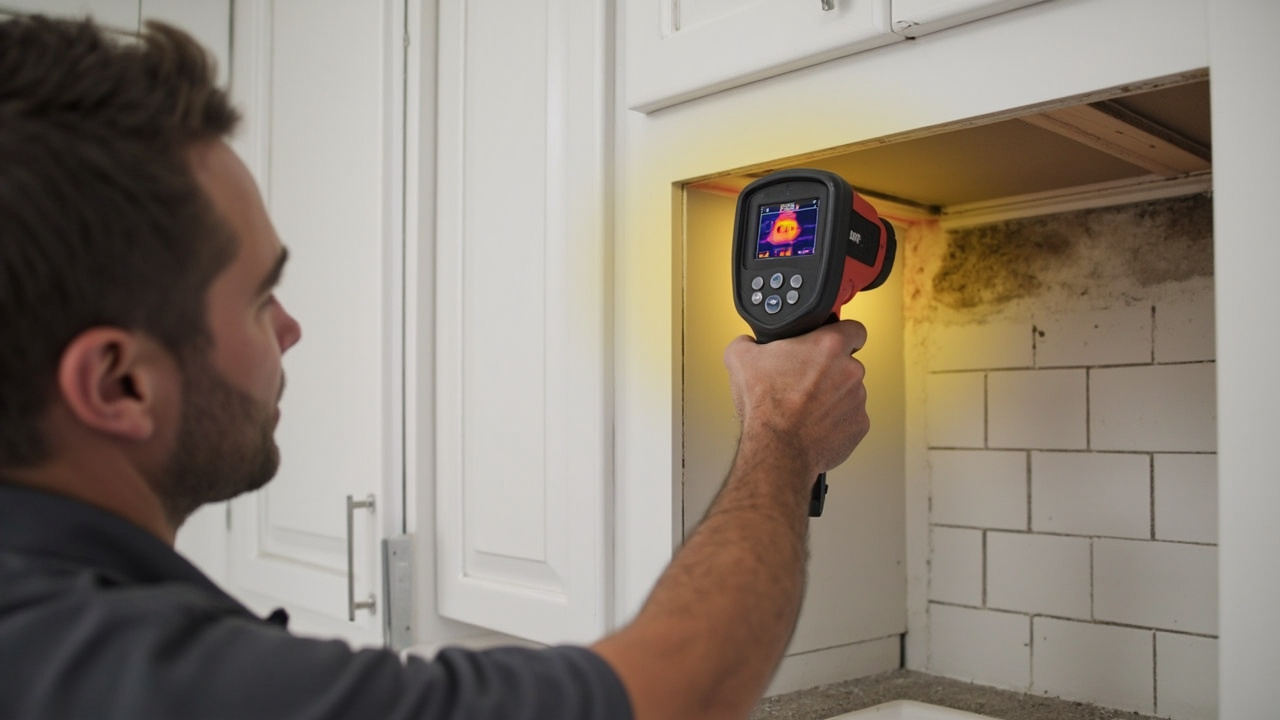
When a restoration team arrives at your Kamm’s Corners home, they use specialized tools to find the water you cannot see. Infrared cameras, also known as thermal imagers, show temperature differences on surfaces. Since wet areas are cooler due to evaporation, these cameras allow technicians to map the moisture migration behind your kitchen cabinets without tearing them out first. This technology is vital for saving high end custom cabinetry that would be expensive to replace.
Moisture meters are then used to get specific readings from the materials. Technicians will check the moisture content of the hardwood, the subfloor, and the studs inside the wall. The goal is to reach a dry standard, which is a reading that matches the unaffected areas of your home. To achieve this, professionals use Low Grain Refrigerant (LGR) dehumidifiers. These machines are much more powerful than anything found in a hardware store. They pull moisture out of the air, which in turn draws moisture out of the building materials through the process of capillary action.
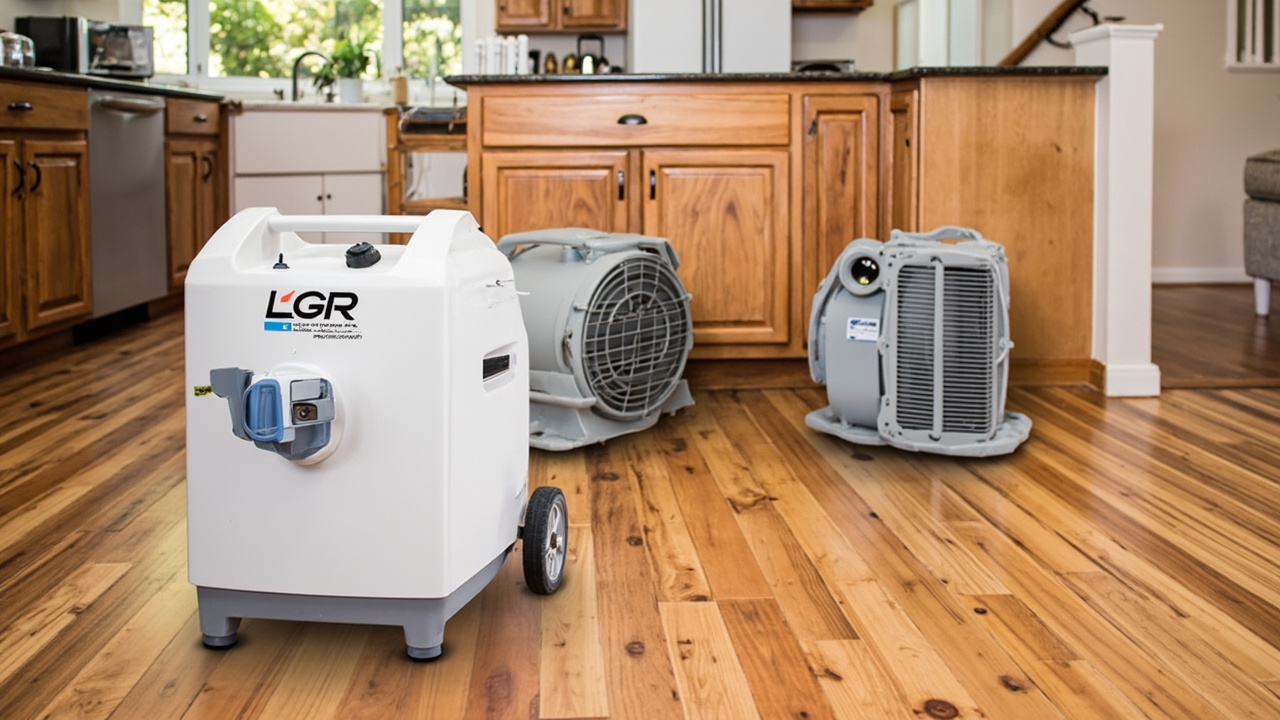
The drying setup often involves air movers placed strategically to create a vortex of airflow across the wet surfaces. If the water has moved under the cabinets, technicians may use an injection drying system. This involves drilling small holes behind the toe kick of the cabinets and pumping warm, dry air directly into the wall void. This method often saves the cabinets from needing to be removed, which saves you time and money during the reconstruction phase. For residents facing similar issues in nearby areas, such as flooded basements in Lakewood, these drying principles remain the same.
Essential Restoration Equipment Specifications
This table details the equipment used to dry out a typical Kamm’s Corners kitchen leak.
| Equipment Type | Purpose | Key Specification |
|---|---|---|
| LGR Dehumidifier | Removes airborne moisture | Removes 80+ pints per day |
| Axial Air Mover | High velocity evaporation | 3000+ CFM airflow |
| Thermal Camera | Hidden leak detection | High thermal sensitivity |
| HEPA Air Scrubber | Filtration of mold spores | 99.97% efficiency at 0.3 microns |
Mold Prevention Following A Kitchen Water Leak
Mold can begin to grow within 24 to 48 hours of a water intrusion. In a kitchen, the organic food sources for mold are everywhere. Dust, paper backing on drywall, and wood glue in the cabinets all provide nutrients for fungal growth. If your refrigerator leak went unnoticed for more than a few days, mold is almost a certainty. Professionals follow the IICRC S500 Standard for professional water damage restoration to ensure the home is safe for occupancy.
Microbial growth in a kitchen is a health concern because this is where you prepare food. If mold is found, the area must be contained with plastic sheeting and negative air pressure. This prevents spores from drifting into the living room or dining area. Technicians will use antimicrobial treatments to kill any existing spores and prevent new ones from forming. If the damage is severe, some materials like the drywall or the insulation may need to be removed and replaced. This is often the case if the leak involved gray water or if the mold has deeply penetrated the material. For other emergency situations like sewer backups in Parma or burst pipes in Westlake, different protocols may apply depending on the water contamination level.
Navigating The Insurance Claim For Kitchen Water Damage
Most homeowners insurance policies in Cleveland cover water damage from a refrigerator line leak as long as the leak was sudden and accidental. Problems arise when a leak is considered maintenance related or if it has been occurring for a long time without intervention. To ensure your claim is handled fairly, you must document everything. Take photos of the broken line, the standing water, and any visible damage to your floors or cabinets.
A professional restoration company will provide a detailed report including moisture maps and drying logs. This data is essential for your insurance adjuster to approve the claim. They need proof that the drying process was necessary and that the materials were returned to a dry standard. Many local restoration firms work directly with major insurance carriers to streamline the billing process. This reduces the out of pocket burden on the homeowner and ensures the work meets the requirements set by the Environmental Protection Agency for indoor air quality.
Steps To Take While Waiting For Restoration Pros
- Turn off the water supply to the refrigerator or the entire house immediately.
- Mop up as much standing water as possible to prevent further migration.
- Take clear photos of the damage for your insurance records.
- Remove items from nearby lower cabinets to prevent them from getting wet.
- Clear a path for the technicians to bring in heavy drying equipment.
- Do not use a standard vacuum to pick up water as this creates an electrical hazard.
- Avoid walking on wet hardwood floors more than necessary to prevent further finish damage.
Managing a refrigerator water line leak requires a balance of speed and technical precision. By understanding the risks to your Kamm’s Corners home and acting quickly to bring in professional drying equipment, you can save your kitchen from long term structural damage and mold. If you find moisture behind your fridge, contact a local expert who knows the specific challenges of Cleveland area homes. Taking the right steps today will protect your property value and the health of your family for years to come.