



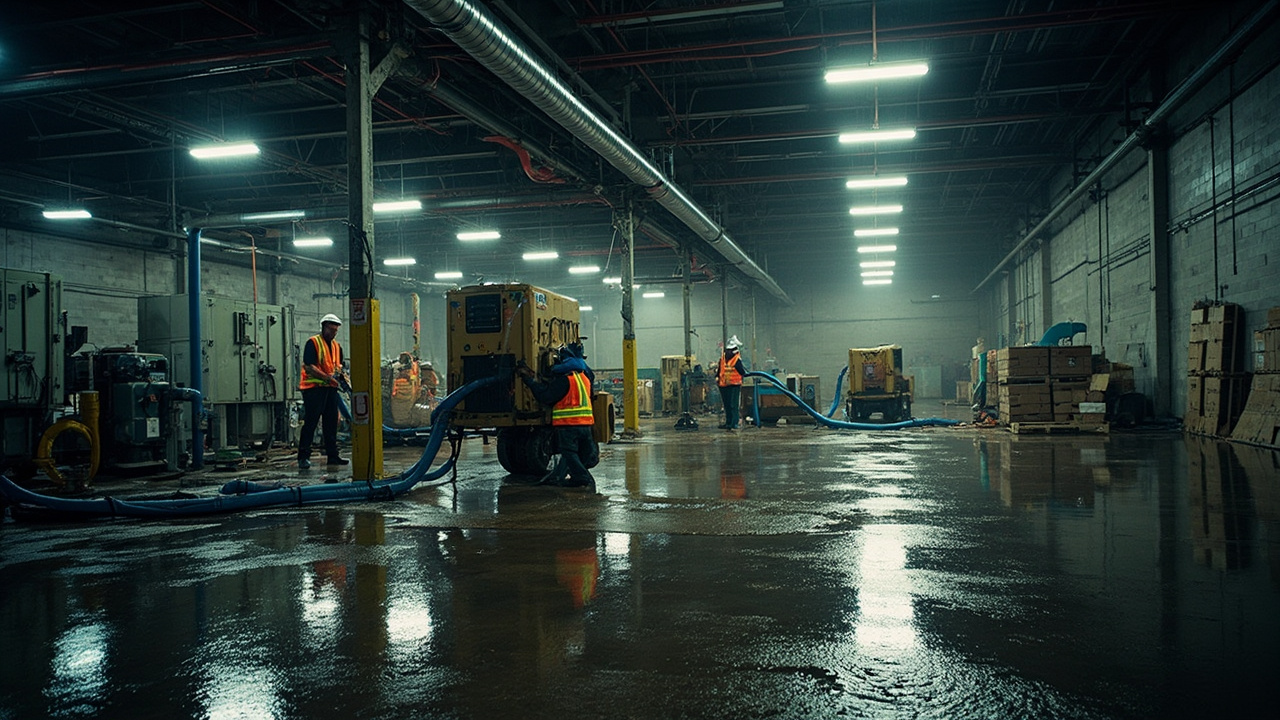
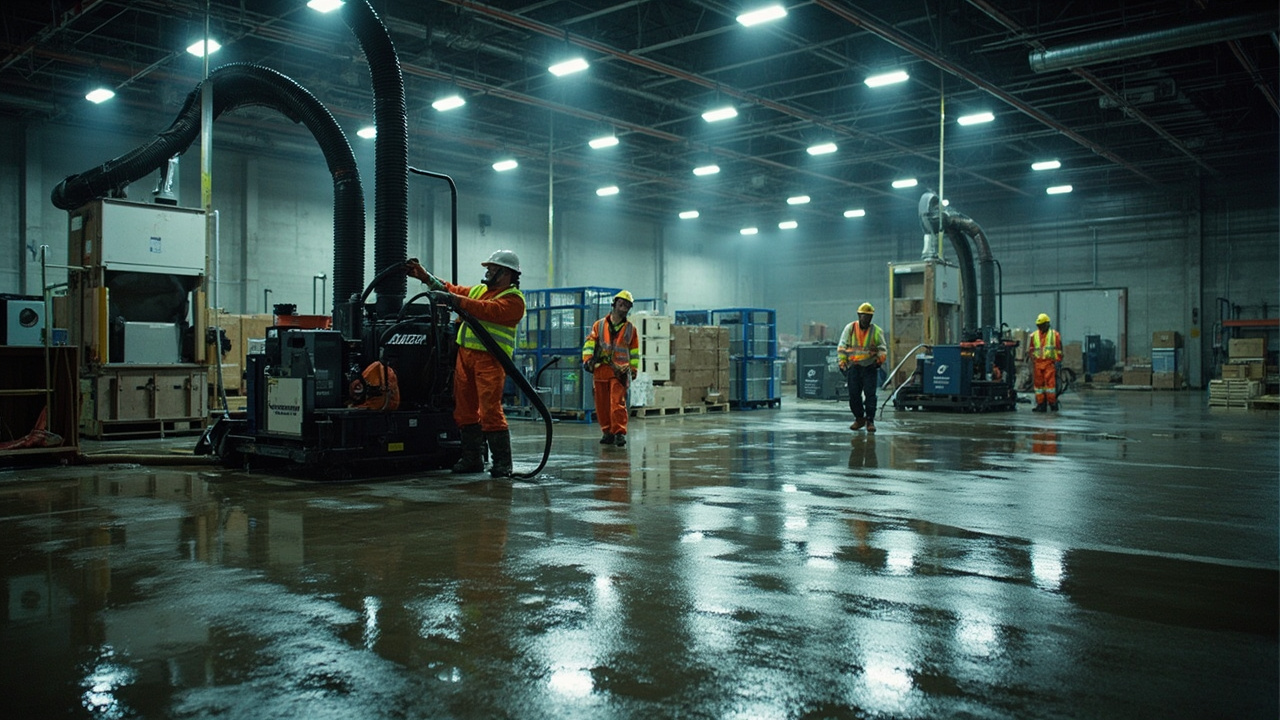
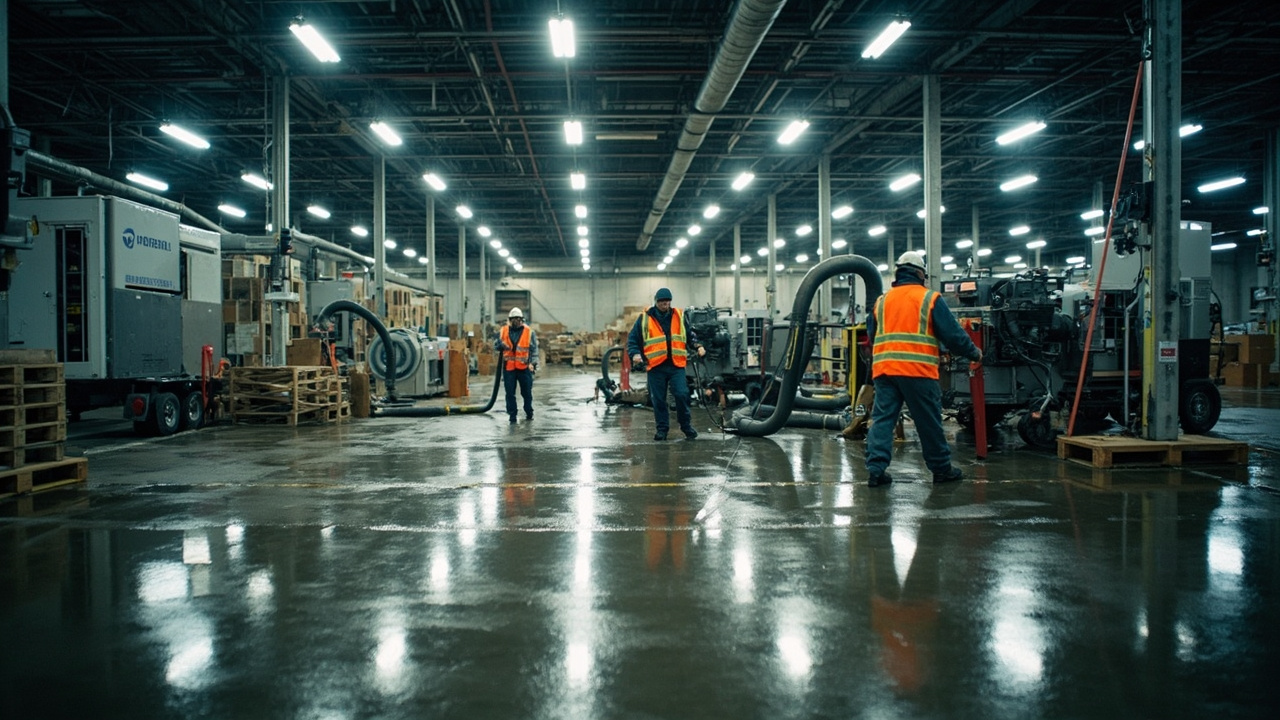
Cleveland's position on Lake Erie creates unique flood risks for industrial properties. Spring snowmelt from the surrounding watershed overwhelms aging stormwater systems, especially in low-lying warehouse districts near the Cuyahoga River and Big Creek. The city's clay-heavy soil does not absorb water efficiently, so runoff pools around buildings and seeps through foundation walls. Lake effect precipitation adds another layer of risk, dumping heavy rain in short bursts that exceed drainage capacity. Warehouses in the Flats and along industrial corridors near I-77 face repeated flood threats during spring thaw and summer storm seasons.
Cleveland's commercial building codes require specific flood mitigation protocols for industrial properties, particularly in FEMA-designated floodplains. Restoration work must meet municipal standards for occupancy permits and insurance compliance. Horizon Water Damage Restoration Cleveland has worked with the city's building department on dozens of commercial flood recoveries. We understand the inspection process, the required documentation, and the timeline for permit approval. Choosing a local provider means faster coordination with city officials, quicker access to inspection schedules, and restoration work that meets Cleveland's regulatory standards the first time.