





menu

Emergency Mold Containment in Cleveland – 24/7 Response Teams Deployed in Under 90 Minutes

When mold starts spreading through your property, every hour counts. Our Cleveland emergency mold containment crews arrive fast, isolate the contaminated areas immediately, and stop spore migration before structural damage and health risks escalate.

Slider Image 1
Slider Image 2
Slider Image 3
Slider Image 4
Slider Image 5
Slider Image 7
Slider Image 8
Slider Image 9
Slider Image 10
Slider Image 11

Why Mold Spreads So Fast in Cleveland Properties

Cleveland's location on Lake Erie creates a perfect storm for rapid mold colonization. The city's average relative humidity hovers between 65 and 75 percent year-round. When you combine that moisture level with older housing stock in neighborhoods like Tremont, Ohio City, and Detroit Shoreway, you get buildings with poor vapor barriers, inadequate attic ventilation, and aging HVAC systems that cannot control indoor humidity.

Mold does not wait. Once water intrusion occurs from a burst pipe, roof leak, or basement seepage, spores begin colonizing porous materials within 24 to 48 hours. By hour 72, active colonies release airborne spores that infiltrate ductwork, carpet padding, and wall cavities. You cannot see this migration happening, but you will smell the musty odor and notice respiratory irritation.

Immediate mold mitigation requires urgent mold isolation to prevent cross-contamination. If you wait for a regular business day appointment, spores spread through your entire HVAC system. Every air exchange cycle distributes contaminated air into clean rooms. This turns a localized problem into a whole-structure remediation project.

Emergency mold abatement is not about convenience. It is about containment physics. Negative air pressure chambers, HEPA filtration barriers, and antimicrobial fogging must be deployed before spores migrate beyond the affected zone. Cleveland's freeze-thaw cycles also create hidden moisture pockets in foundation walls and crawl spaces. Water migrates through capillary action in concrete block, creating mold growth you cannot see until drywall starts bubbling.

Rapid mold containment services stop this progression. You need technicians who understand how Lake Erie's weather patterns affect building envelopes and where moisture hides in Cleveland's typical brick-and-frame construction.

Why Mold Spreads So Fast in Cleveland Properties
How Professional Emergency Mold Containment Actually Works

How Professional Emergency Mold Containment Actually Works

Real emergency mold containment is not about spraying bleach and running a box fan. It requires controlled demolition, engineered airflow, and contamination protocols that protect unaffected areas while technicians remove colonized materials.

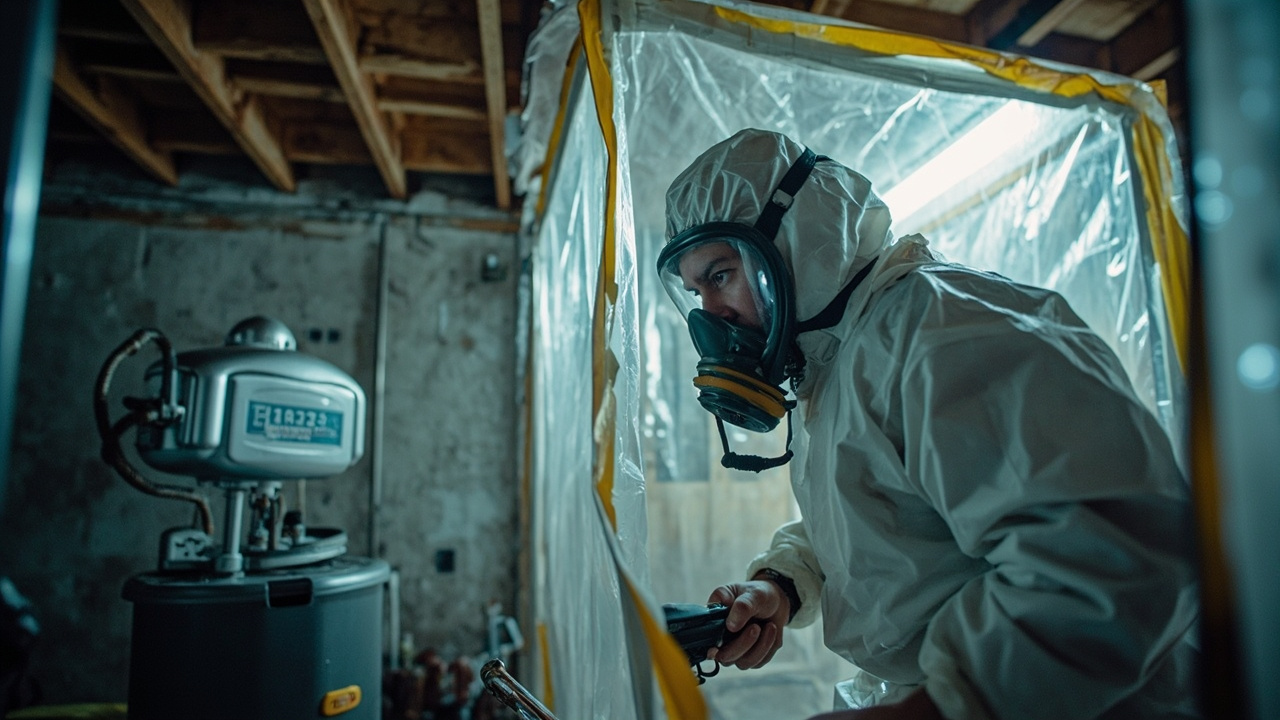
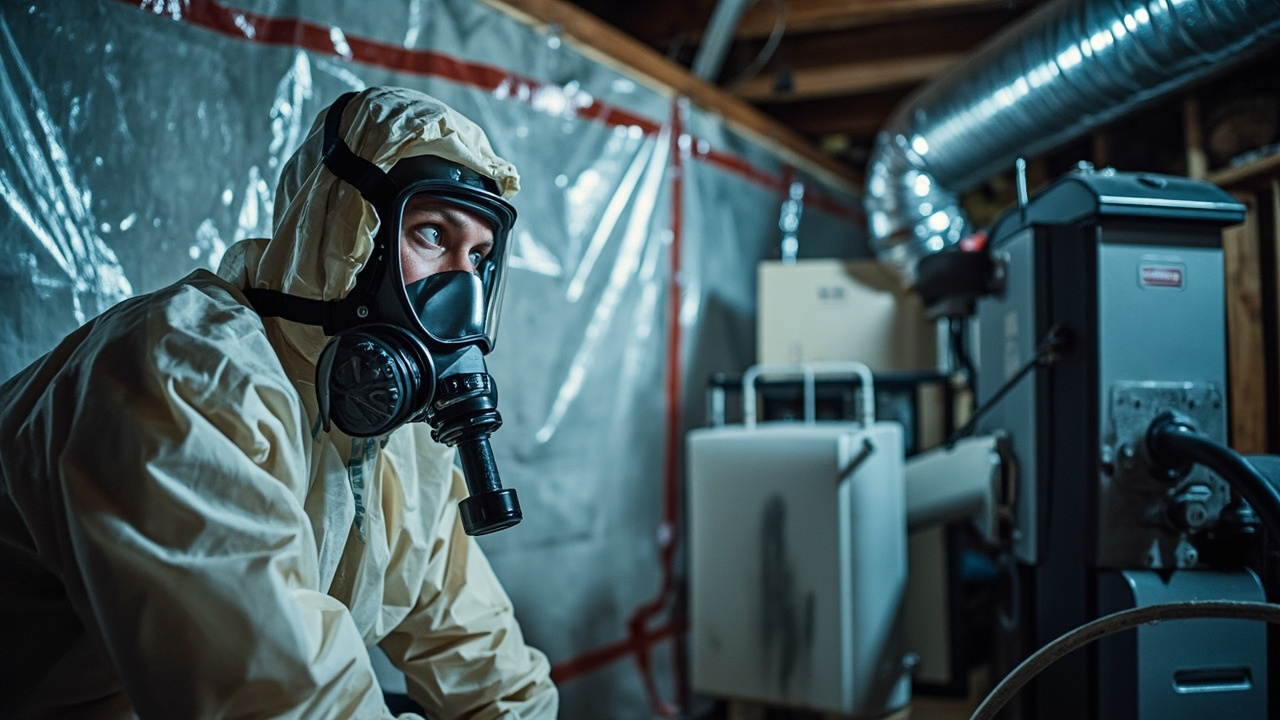
We establish physical containment barriers using 6-mil polyethylene sheeting sealed with contractor-grade tape. Every seam matters. A single gap allows spore escape. We create airlocks at entry points so technicians can move equipment without breaking containment integrity. Negative air machines pull contaminated air through HEPA filters rated to capture particles down to 0.3 microns. This creates lower air pressure inside the containment zone than surrounding rooms, so airflow always moves toward the contaminated area, never away from it.

Technicians wear full Tyvek suits, N95 or P100 respirators, and gloves because mold exposure during demolition releases massive spore concentrations. We document pre-containment spore counts using air cassette sampling, then compare post-remediation levels to verify clearance. You cannot skip this step and claim the job is complete.

Material removal follows a wet-demolition protocol. We mist surfaces with antimicrobial solution before cutting drywall or pulling insulation. This prevents spore aerosolization. Bagged debris exits through the airlock directly into sealed containers. Nothing touches clean areas.

After removal, we treat all surfaces with hospital-grade disinfectant, then run air scrubbers for 48 to 72 hours while monitoring particle counts. Only when independent testing confirms spore levels match outdoor ambient counts do we break containment. Horizon Water Damage Restoration Cleveland uses this protocol on every emergency response because shortcuts create liability and health risks you will discover months later when mold returns or occupants develop respiratory issues.

What Happens When You Call for Emergency Containment

Emergency Mold Containment in Cleveland – 24/7 Response Teams Deployed in Under 90 Minutes
01

Immediate Dispatch and Assessment

Within 15 minutes of your call, a containment team receives GPS dispatch to your Cleveland property. We arrive with moisture meters, thermal imaging cameras, and air sampling equipment. Before setting up barriers, technicians map the contamination extent using spore testing and moisture readings. You receive a documented scope of affected areas, contamination level, and containment strategy before work begins. No surprises.
02

Containment Setup and Isolation

Crews seal off contaminated zones using commercial containment barriers and establish negative air pressure within 60 minutes of arrival. HEPA air scrubbers activate immediately to begin spore capture. We shut down HVAC systems serving affected areas to prevent duct contamination. All furniture and contents in the containment zone get wrapped or removed. This phase stops mold migration while protecting your belongings from demolition dust and antimicrobial treatments.
03

Remediation and Clearance Testing

After removing all colonized materials and treating surfaces, we run air scrubbers continuously until independent laboratory testing confirms spore counts meet clearance standards. You receive documentation showing before and after particle counts. Only then do we remove containment barriers and return HVAC systems to service. This verification protects your health and provides documentation for insurance claims or property disclosures if you sell.

Why Cleveland Properties Need Local Mold Containment Experts

Mold containment failures happen when out-of-town crews do not understand how Cleveland's building stock behaves. A technician from Columbus or Akron might not recognize that Cleveland's pre-1950 homes often have balloon framing. This construction method creates vertical chases from basement to attic with zero fire blocking. Mold spores travel these voids like highway lanes. If you do not contain the entire chase, spores migrate three floors away from the original water damage.

Cleveland's proximity to Lake Erie also means basement humidity stays elevated even when you run dehumidifiers. The water table sits high in neighborhoods near the lakefront and along the Cuyahoga River valley. Foundation walls wick moisture through capillary action. National franchise crews see surface mold on basement drywall and treat it like a simple cleanup. Local technicians know to check behind that drywall for block wall colonization that requires different containment and treatment protocols.

We also understand Cleveland's municipal code requirements for mold remediation in rental properties. Landlords face legal exposure if tenants develop health issues from improper containment. Documentation matters. Air sampling,PhotOgraphic evidence, and clearance testing protect you from liability claims.

Horizon Water Damage Restoration Cleveland maintains relationships with local industrial hygienists, environmental testing labs, and restoration equipment suppliers. When a project requires specialized tools like thermal foggers or hydroxyl generators, we have them on trucks, not ordered from a warehouse two states away. Speed matters in emergency containment.

We also coordinate directly with Cleveland-area insurance adjusters who know our work quality. This speeds up claims processing and reduces disputes over scope. You get containment started immediately instead of waiting days for adjuster approval because they trust our documentation and pricing.

What to Expect During Emergency Mold Containment

Response Time and Availability

Emergency containment crews deploy 24 hours a day, 365 days a year. You reach a live dispatcher, not an answering service. We dispatch teams within 15 minutes and arrive on-site in under 90 minutes anywhere in Cuyahoga County. Night and weekend calls receive identical response priority. Equipment trucks carry full containment supplies so setup begins immediately. You do not wait until morning or Monday for mold to spread unchecked through your property while spores colonize new materials.

Initial Assessment and Containment Strategy

Technicians perform moisture mapping and visual inspection to identify all affected areas before containment setup. Thermal imaging reveals hidden moisture in wall cavities and ceiling spaces where mold grows invisibly. Air sampling establishes baseline spore counts. You receive a written containment plan explaining barrier placement, negative air machine positioning, and estimated material removal scope. This assessment takes 30 to 45 minutes. We explain findings in plain language so you understand what needs removal and why.

Containment Quality and Thoroughness

Proper containment leaves your unaffected rooms completely protected from spore contamination. You will not smell mold odor spreading through your house. HEPA filtration removes airborne particles continuously. Demolition debris exits through sealed bags directly into covered dumpsters. Technicians clean and vacuum containment barriers daily to prevent dust buildup. After material removal, we treat all surfaces with EPA-registered antimicrobial solutions and run air scrubbers until independent testing confirms spore levels meet clearance standards. You receive laboratory documentation.

Post-Containment Verification and Documentation

Emergency containment is not complete until third-party air testing confirms successful remediation. We provide detailed photographic documentation of all affected areas before containment, during demolition, and after treatment. You receive copies of laboratory clearance reports showing spore counts returned to normal levels. This documentation protects you during property sales, insurance claims, or tenant disputes. We also provide moisture readings confirming the underlying water source was eliminated. Without source control, mold returns within months.

Frequently Asked Questions

You Have Questions,
We Have Answers

Does FEMA pay for mold remediation? +

FEMA does not typically cover mold remediation directly. FEMA disaster assistance focuses on structural repairs caused by declared disasters like floods or storms. If mold results from a FEMA-covered event, you may receive funds for the underlying water damage, but mold cleanup usually falls outside their scope. Your homeowner's insurance is the first line of defense. In Cleveland, where basement flooding and humidity can trigger mold after storms, document everything immediately. Take photos, file insurance claims fast, and contact a certified remediation company within 24-48 hours to prevent mold from spreading and complicating your claim.

How to set up containment for mold? +

Proper mold containment stops spores from spreading during remediation. Seal off the affected area with heavy-duty plastic sheeting, securing it with tape from floor to ceiling. Close all doors and vents. Set up negative air pressure using HEPA-filtered air scrubbers to pull contaminated air out and filter it before exhaust. In Cleveland homes, basements and crawl spaces often require containment due to high humidity and poor ventilation. Never run your HVAC system during containment, as it can spread spores throughout your home. This is not a DIY job if the area exceeds 10 square feet. Call professionals immediately.

Is mold remediation an emergency? +

Yes. Mold becomes an emergency when it spreads rapidly, affects HVAC systems, or threatens health. In Cleveland, where Lake Erie humidity and older housing stock create ideal conditions, mold can colonize within 24-48 hours after water intrusion. If you see visible growth, smell musty odors, or experience respiratory issues, act now. Delaying remediation allows mold to penetrate drywall, insulation, and framing, turning a contained problem into a structural disaster. Black mold and other toxic species require immediate professional containment. Do not wait. The longer mold grows, the more expensive and invasive the fix becomes.

What to do if you can't afford mold remediation? +

If you cannot afford full remediation, prioritize containment and safety first. Isolate the affected area immediately to prevent spread. Contact your insurance company to verify coverage. Many policies cover mold if it resulted from a sudden water event. In Cleveland, local nonprofits and community action agencies sometimes offer emergency home repair assistance. Payment plans are available through many remediation companies. For small areas under 10 square feet, you can attempt DIY removal using protective gear and proper cleaning agents, but anything larger demands professional help. Do not ignore the problem. Mold worsens fast and devalues your home significantly.

How do you prove mold is making you sick? +

Proving mold illness requires medical documentation and environmental testing. See a doctor experienced in environmental medicine or toxicology. Request blood tests for mold antibodies, mycotoxin panels, and allergy testing. Keep a symptom diary linking your health to time spent in the contaminated space. Hire a certified mold inspector in Cleveland to test air and surface samples, identifying species and spore counts. Lab results combined with medical records create a documented link. This evidence supports insurance claims, landlord disputes, or legal action. Do not rely on symptoms alone. Get professional testing and medical evaluation to build your case.

What is the FEMA 80% rule? +

The FEMA 80% rule is a flood insurance guideline, not a mold rule. It states that if repairs or improvements to your home exceed 50% of its market value, you must bring the entire structure up to current flood code. This matters in Cleveland flood zones near the Cuyahoga River or Lake Erie shoreline. If water damage triggers this threshold, your remediation and rebuild costs escalate significantly. Always consult a licensed contractor and your insurance adjuster before starting work. The rule does not directly address mold, but mold remediation costs can push total repairs over that 50% trigger, complicating your project.

What kills mold permanently? +

Nothing kills mold permanently if moisture remains. Professional remediation removes mold physically using HEPA vacuums, antimicrobial agents, and controlled demolition of porous materials like drywall and insulation. EPA-registered fungicides and encapsulants stop regrowth on non-porous surfaces. In Cleveland, where humidity and aging basements fuel recurrence, you must fix the water source. Repair leaks, improve ventilation, install dehumidifiers, and redirect grading away from foundations. Killing visible mold is only half the job. Without moisture control, mold returns within weeks. Address the root cause or you waste time and money treating symptoms.

What are the 10 warning signs of mold toxicity? +

Ten warning signs of mold toxicity include chronic fatigue, brain fog, headaches, respiratory issues, sinus congestion, skin rashes, joint pain, sensitivity to light, digestive problems, and unexplained anxiety or depression. In Cleveland, where older homes trap moisture and Lake Erie humidity accelerates growth, residents often mistake these symptoms for allergies or seasonal illness. If symptoms improve when you leave your home and worsen upon return, suspect mold. Do not self-diagnose. See a doctor and hire a certified mold inspector immediately. Prolonged exposure can cause serious health complications, especially in children, elderly, and immunocompromised individuals.

What plant removes 78% of airborne mold? +

The English Ivy plant reportedly removes up to 78% of airborne mold spores in controlled studies. While houseplants can improve indoor air quality, they are not a remediation solution. In Cleveland homes with active mold growth, relying on plants is dangerous. They may reduce airborne spores slightly, but they do not address the source or remove colonized mold from walls, ceilings, or HVAC systems. Use HEPA air purifiers and dehumidifiers instead. If you see or smell mold, call professionals immediately. Plants are a supplemental air quality tool after remediation, not a fix for contamination.

What's the average cost of mold removal? +

Mold removal costs vary widely based on contamination size, location, and structural damage. Small projects under 10 square feet may cost a few hundred dollars. Whole-room or multi-room remediation in Cleveland basements or attics can range into the thousands. Factors include containment complexity, demolition needs, HVAC cleaning, and post-remediation testing. Older Cleveland homes with hidden moisture issues often require invasive work. Get at least three quotes from certified remediators. Do not choose based on price alone. Cheap shortcuts lead to regrowth and repeat costs. Verify certifications, insurance, and references before hiring anyone.

How Lake Erie Humidity Accelerates Mold Growth in Cleveland Homes

Cleveland sits on Lake Erie's southern shore, where prevailing winds push moisture-saturated air inland year-round. This creates average relative humidity between 65 and 75 percent, well above the 60 percent threshold where mold spores activate and colonize. Older neighborhoods like Kamm's Corners, Edgewater, and Collinwood contain thousands of homes built before modern vapor barrier requirements. These properties lack adequate moisture control in attics, crawl spaces, and exterior walls. When summer humidity combines with air conditioning that cycles on and off, condensation forms on cold surfaces inside wall cavities. You cannot see this moisture, but mold colonizes insulation, OSB sheathing, and framing lumber within 48 hours. Emergency mold abatement in Cleveland requires understanding how lake-effect humidity penetrates building envelopes and where moisture accumulates invisibly.

Cleveland's housing diversity demands local containment expertise. Historic homes in University Circle feature plaster walls on wood lath, which requires different demolition protocols than modern drywall. Brick rowhouses in Slavic Village have shared party walls where mold can migrate between units if containment barriers do not extend to structural boundaries. Industrial buildings repurposed as lofts often have concrete floors with inadequate waterproofing, creating chronic moisture issues. Horizon Water Damage Restoration Cleveland technicians train specifically on these local construction types. We understand Cleveland Municipal Code requirements for lead-safe work practices during demolition in pre-1978 buildings. This protects you from EPA violations and additional contamination. National franchises send crews who learned mold remediation in different climates on different building types. Local knowledge prevents costly mistakes.
Water Damage Restoration Services in The Cleveland Area

Horizon Water Damage Restoration Cleveland proudly serves the entire Cleveland area and its surrounding communities. Our team is strategically located to ensure a rapid response to your water damage emergency. We are committed to being there for you when you need us most. Please view the map to see our service area and feel free to reach out to us with any questions or for immediate assistance.

Address:
Horizon Water Damage Restoration Cleveland, 3224 Prospect Ave E, Cleveland, OH, 44115

Additional Services We Offer

Our news updates

Latest Articles & News from The Blogs

South Euclid basements face a relentless battle against groundwater due to the heavy clay soil common across the Cleveland metro…

Why South Euclid homeowners need more than a standard dehumidifier for wet basements

South Euclid basements face a relentless battle against groundwater due to the heavy clay soil common across the Cleveland metro…

Why your air conditioner is leaking through the ceiling in Broadview Heights

AC Condensate Leak Water Damage Solutions for Cleveland Homeowners A yellow stain appearing on your second floor ceiling often signals…

Can Water Get Trapped Under the Tile in Your Woodmere Kitchen

Water trapped under kitchen tile is a hidden threat for many Woodmere homeowners. You might see a beautiful porcelain or…

Contact Us

Mold contamination doubles every 48 hours. Call (216) 547-1277 now for immediate dispatch. Our containment crews arrive in under 90 minutes with equipment ready. Do not let spores spread through your entire property while you wait for business hours.